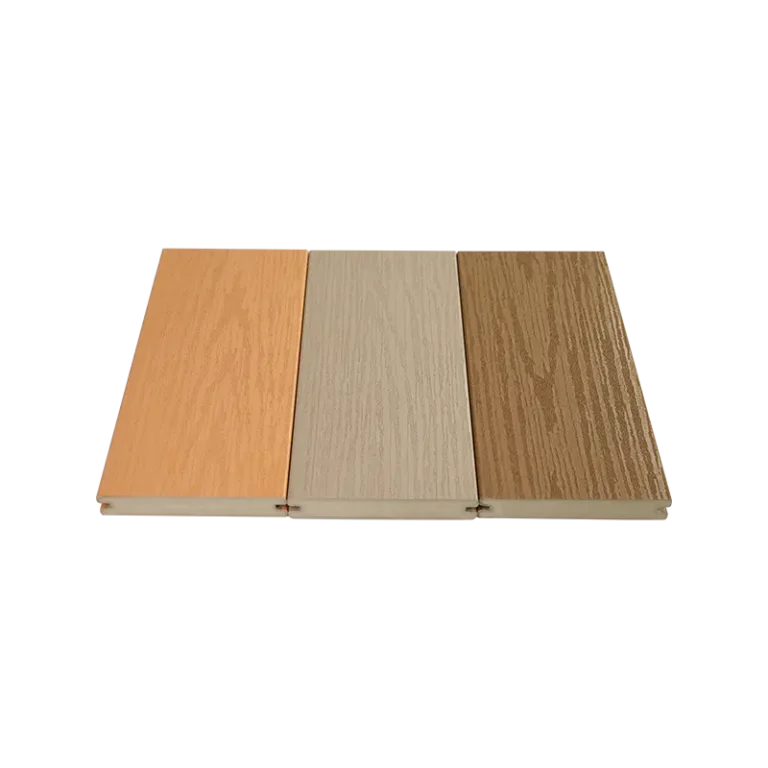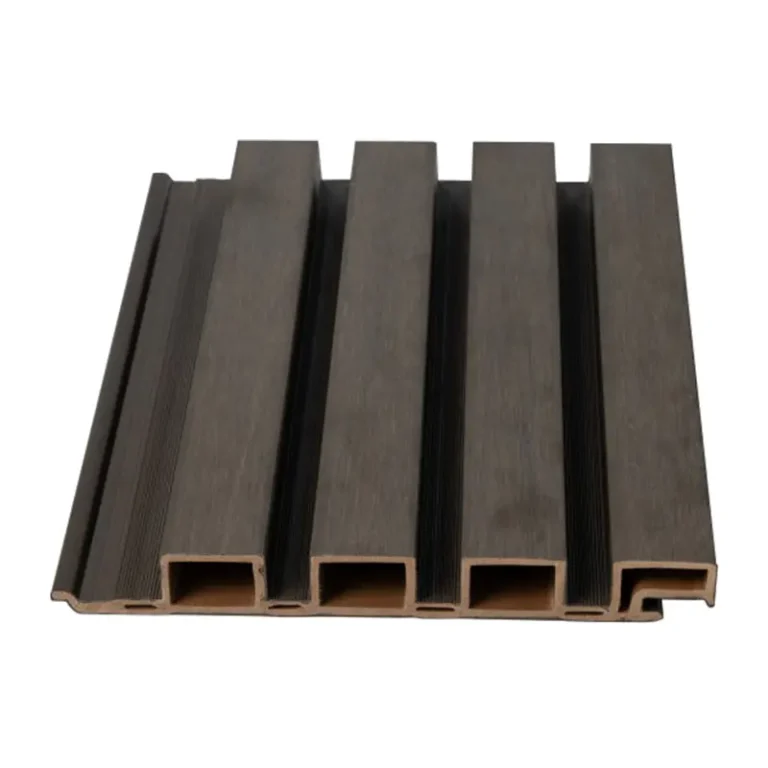
Fluted wall panels appear in more specified projects than most people notice. They show up as slatted feature walls in hotel lobbies, vertical accent surfaces in apartment entryways, and UV-resistant exterior cladding on commercial buildings in hot climates. The look fits both minimalist and warm-modern settings, which is why specification frequency keeps climbing. The practical question for an architect, contractor, or renovation homeowner is not whether fluted panels look good, but which fluted wall panel should be installed. The answer comes down to material, installation location, and climate tolerance, in that order.
What Is a Fluted Wall Panel?
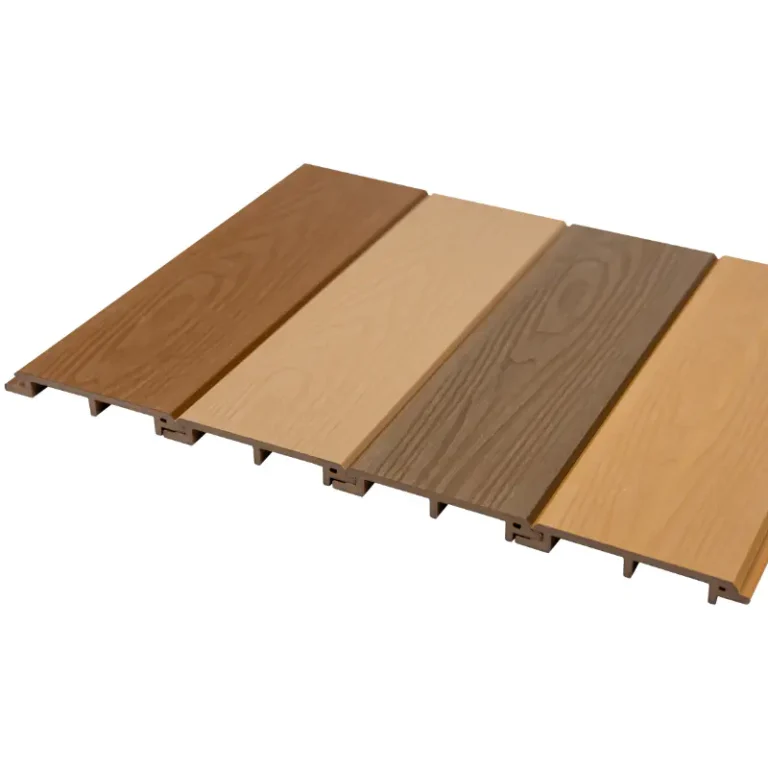
A fluted wall panel is a wall panel with repeated parallel vertical grooves built into its face. The grooves create a rhythm of shadows that adds depth to an otherwise flat surface. Fluted panels are not the same as wood slat wall panels: slat systems are assembled from separate strips, while fluted panels are one piece with the grooves extruded or machined directly into the profile. Most extruded fluted panels are produced in standard widths such as 190mm, 194mm, and 219mm, and they can run the full height of a wall with few visible joints. The result is a cleaner, more seamless textured surface than a typical slat installation.
Fluted Wall Panel Materials Compared
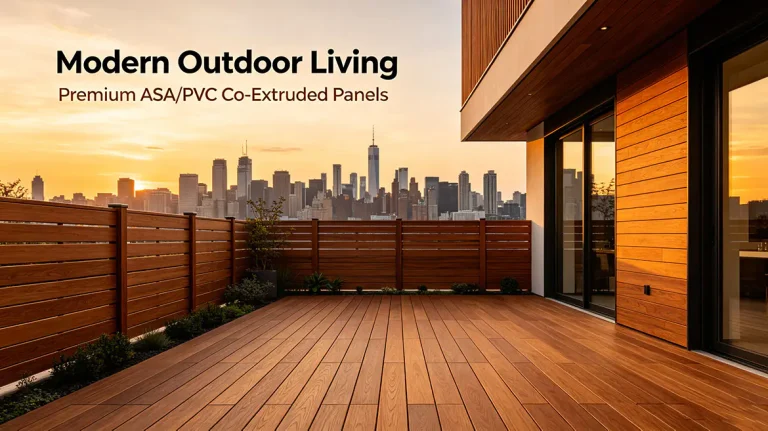
The material matters more than the profile. A fluted panel’s core determines its water resistance, impact strength, fire performance, and service life. MDF fluted panels remain popular because they are inexpensive and easy to paint, but they swell when exposed to moisture and should stay indoors. PVC foam panels handle humidity better and weigh less, which makes them a solid default for interior feature walls. WPC panels give a more natural wood texture and are common in decorative grille designs. For full outdoor exposure, an ASA/PVC coextruded panel is the strongest choice: the PVC core absorbs impact, while the ASA cap layer blocks ultraviolet degradation that makes standard PVC yellow or chalk.
| Material | Indoor or Outdoor | Moisture Resistance | Typical Use |
|---|---|---|---|
| MDF | Indoor only | Poor | Painted feature walls, joinery |
| PVC foam | Indoor, sheltered | Good | Interior walls, bathrooms, ceilings |
| WPC | Indoor, sheltered outdoor | Moderate | Decorative grilles, acoustic walls |
| ASA/PVC coextruded | Indoor and outdoor | High | Facades, exterior cladding, humid zones |
A coextruded fluted wall panel costs more per square meter than plain PVC, but the longer service life compensates when the panel will face direct sunlight or coastal humidity. For a balanced interior upgrade at moderate cost, the 190mm coextruded fluted wall panel is a representative choice because it combines the dimensional stability of PVC with a UV-resistant outer layer.