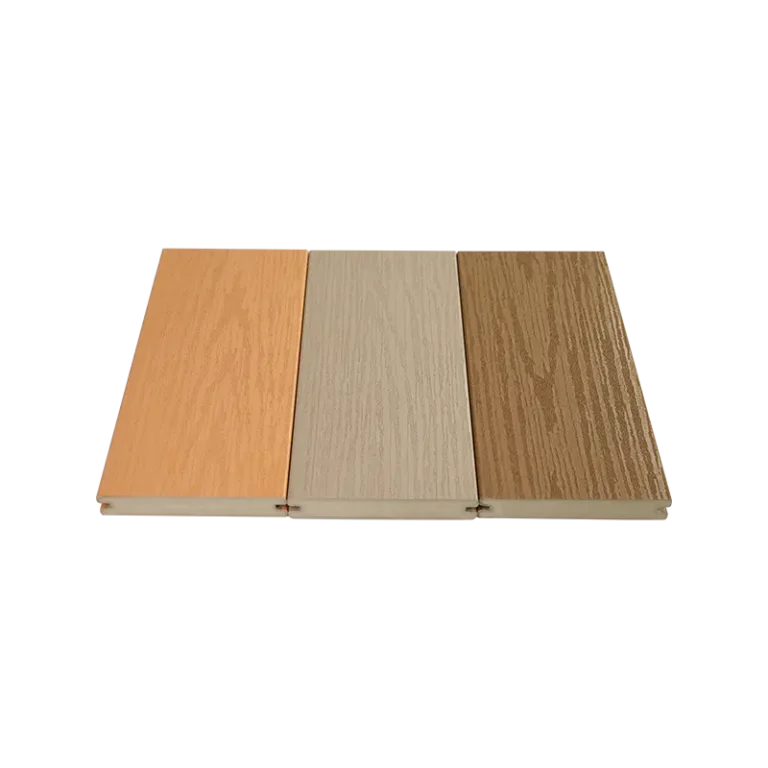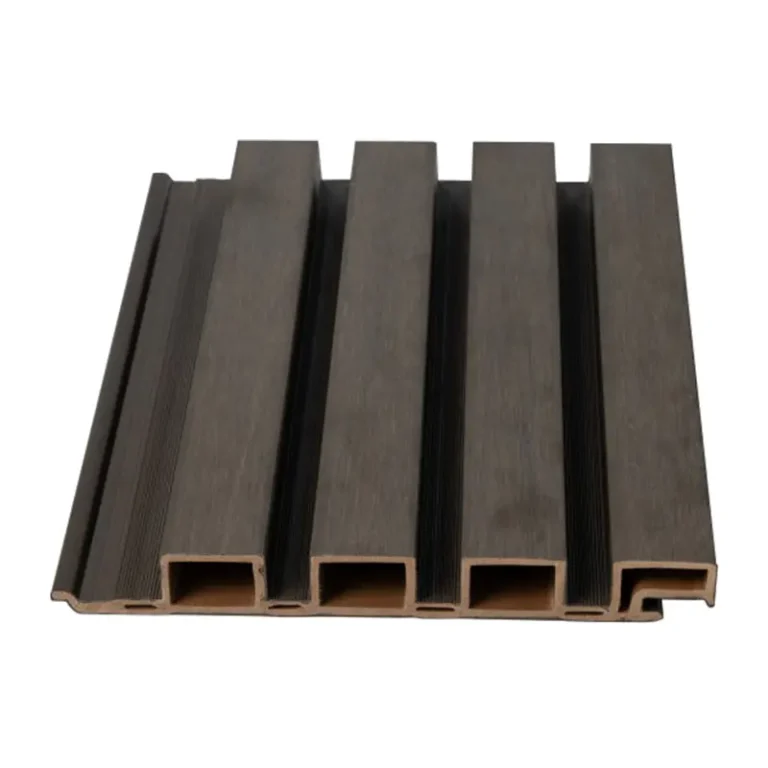
A pressure-treated pine deck demands washing, brightening, and re-staining every two to three years, and each cycle costs a weekend of labor or a contractor invoice. Composite decking material exists to end that cycle: boards extruded from wood fiber and plastic, or from polymer alone, that never need sealing, staining, or painting. The short answer for most buyers is that capped composite decking justifies its premium in sunny, wet, or poolside settings, but only if you check the cap, the core density, and the expansion gaps, because those three details decide whether the surface still looks right in year ten or fades and buckles in year three.
What Composite Decking Material Actually Is
Composite decking is an engineered board produced by extruding a heated blend of wood flour, plastic resin, and additives such as UV stabilizers, pigments, and lubricants. The wood flour, usually recovered hardwood or rice hulls, supplies stiffness and a natural matte texture. The plastic binds the board and keeps water out, and it is normally one of three resins: polyethylene (PE), polypropylene (PP), or polyvinyl chloride (PVC). PE and PP boards behave similarly in service, while PVC-based boards absorb less water and hold fasteners well in humid climates.
The construction detail that separates price tiers is the cap. First-generation boards are uncapped, meaning the wood-plastic blend is exposed on every surface; these drink water at cut ends, fade unevenly, and grow surface mold in damp, shaded yards. Capped boards, often called co-extruded boards, add a bonded polymer shell during extrusion, typically somewhere between a fraction of a millimeter and 2 mm thick. The cap is the working weatherproof layer: it blocks UV, shrugs off grease and wine spills, and keeps the core dry. A PVC core capped with ASA (acrylonitrile styrene acrylate) is a frequent specification for hot-climate markets, because ASA holds its color and surface gloss under intense sunlight better than many standard cap materials. For buyers who want the underlying material logic spelled out, this industry overview of why ASA/PVC co-extrusion products suit outdoor decoration covers the reasoning in more depth.
The Three Generations You Will Encounter
- Uncapped wood-plastic composite (WPC): a PE or PP core with wood flour and no shell. Lowest price, highest upkeep within the composite family, and visible fading often within the first two summers.
- Capped WPC: a wood-plastic core wrapped in a polymer cap on three or four sides. The practical middle ground for most residential decks.
- Fully capped PVC or polymer boards: a plastic core, sometimes cellular or foamed, with a dense ASA or acrylic cap on all sides. Lowest water uptake, and the usual choice for pools, marinas, and waterfront homes.